2019-04-03

Evolution and missing links; fundamentalist discovers the real world; Muhammad; Detering and Trump

Creative Commons License
This work is licensed under a Creative Commons Attribution 4.0 International License.

by Neil Godfrey

330px-Yellow-bellied_three-toed_skinkFrom Rosa Rubicondior

Three-toed Skink Is an Evolutionary Intermediate

Which came first the lizard or the egg? – The University of Sydney

Today from the the reptile world, we have a very nice example of evolution in progress, or at least in a state of dynamic equilibrium between two characteristics, each of which could be advantageous in different circumstances.

This example is an Australian skink which appears to be so finely balanced between egg-laying (oviparous) and live-young bearing (viviparous), that one individual has been observed doing both in the same pregnancy. Several weeks after laying a batch of three eggs, an individual three-toed skink, Saiphos equalis, was seen to give birth to a live young. . . .

From Julia Bainbridge on Salon.com

Life after fundamentalist Christianity: One former believer’s struggle to find clarity and himself

. . . . “Even though I still had my small bubble around me, we were what Christian artists would call playing crossover venues,” he told “The Lonely Hour.” “We were out there playing bars and meeting people all over the country that my parents warned me about or that the church cursed. I’m becoming friends with them and I’m having these beautiful, wonderful experiences with them. So I started to question my religion: Is this what they were worried about? Like, just normal people? That definitely started to challenge my long-held beliefs even further.” . . . .

Reading James’ story made me wish I had never given up music lessons so I, too, could have been in a band and learned lessons far sooner than I did. There’s also a link to the audio interview with James.

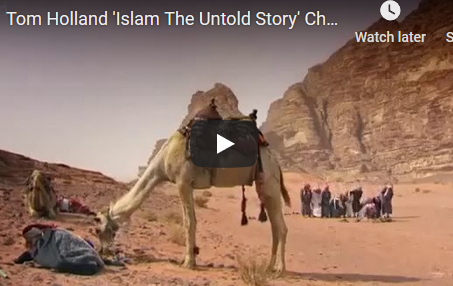
untoldstory
Just an image here. Go to the post on the “untold story” or John Loftus’s site for the video.

From Debunking Christianity

Was Mohammad Real?

“We can’t be certain how the Arabs became Muslim”, says researcher Tom Holland. Fascinating! Was Mohammad (“the Praised One”) originally Jesus? Was Islam originally a non-trinitarian Christian sect that rejected the need for an atonement on the cross? The evidence from coins don’t lie. People do. This is extremely interesting and new to me. Makes sense. The first video is by the Atheistic Republic, who got me thinking. The others back it up.

Loftus refers to Tom Holland’s exploration of the question of Muhammad’s historicity, something I have done here, too — See

Come on, John. Keep up.

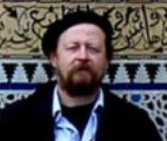
deteringFrom René Salm’s Mythicist Papers

Rene Salm is continuing to augment a database of Hermann Detering’s legacy:

This is the first of several posts that will review Dr. Detering’s life and scholarship according to the available material on- and offline. It is carried out from afar and in an admittedly impromptu manner. I invite readers to add data, links, or corrections—simply send me an email with the information and I will consider adding it to the CV. The Wikipedia article (German here) is a good place to begin, and Detering’s own brief VITA in German is on his website here.

These posts are deceptively short. However, they are dense with links that offer the interested reader avenues to explore a good deal of material.

If possible, I would like to add a personal impression of Dr. Detering’s character, work, and family life. Any reader who knew Hermann personally, and for some length of time, is invited to email me his/her impressions which I will review and certainly consider uploading.

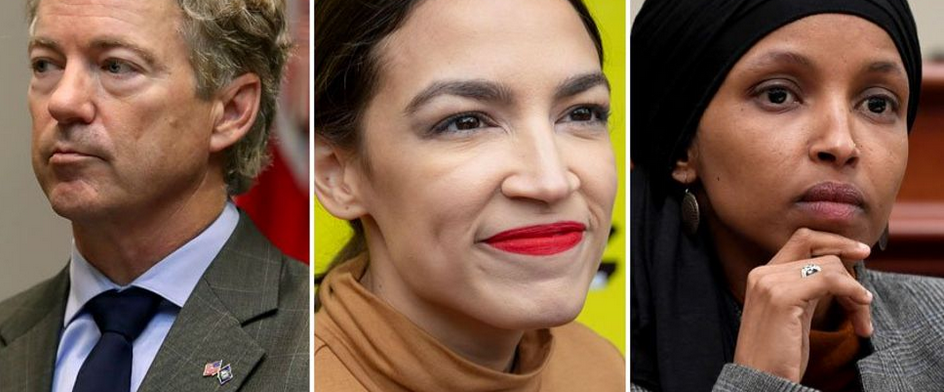
rand-aoc-omarOh no, from Salon.com, some frightening news!

Alexandria Ocasio-Cortez and Ilhan Omar team up with Rand Paul to praise Trump for Syria withdrawal

Won’t Trump see their support as enough reason to change his mind and go back into Syria in force?!! Why can’t they just stay quiet and make him think they oppose him on everything?


2019-03-24

Atheists Criticizing Religion, especially Islam

Creative Commons License
This work is licensed under a Creative Commons Attribution 4.0 International License.

by Neil Godfrey

I liked these paragraphs by Adam Lee of Daylight Atheism:

I’ve written a lot about my disagreements with Islam (which are, I shouldn’t have to add, no different in kind from my disagreements with other faiths). However, I hope I’ve always been clear that whatever philosophical or theological differences we have with each other, those conversations have to be built on a bedrock of mutual respect for human rights. When we criticize religion, it should always be centered on protecting the vulnerable and ending suffering and injustice – not on finding an excuse to proclaim our tribe’s superiority or a justification to banish the other from our sight.

That’s a balance the atheist community hasn’t always gotten right, and that alone ought to give us a reason for self-reflection. As I’ve said before, Muslims are human beings who deserve the same rights as everyone else. Anyone who’s willing to abide by the laws of a secular society should have the freedom to live wherever they choose and practice their own faith as their conscience directs them.

It’s times like these that we need to stand in solidarity with them and make it clear that we don’t condone bigotry of any kind. If that means we need to offer our support and protection even to those we have sharp disagreements with about theology, so be it. If anyone ever thinks that anything I’ve written justifies prejudice against Muslims, let alone terroristic violence, they haven’t listened to a word I’ve said.

Dystopia Journal #27: Horror in New Zealand


2019-03-18

A Compassionate Nation

Creative Commons License
This work is licensed under a Creative Commons Attribution 4.0 International License.

by Neil Godfrey

New Zealand PM: We will Pay for Funeral Costs of Victims and Financially Support their Families

“We are very focused in ensuring you have the support that you need in the days and the weeks and the months that follow.

Many of those who have lost their lives will be the ones who will be bringing the income into their households. Many will have dependants and spouses. I want to give you assurance the through our system in New Zealand, through ACC, there is provision to provide for those families.

That provision exists regardless of the immigration status of those who have lost their lives and regardless of the immigration status of their loved ones. It includes the cost of burial. It includes support for lost income and that can last for not just months but it can last for years. So I give you that assurance”

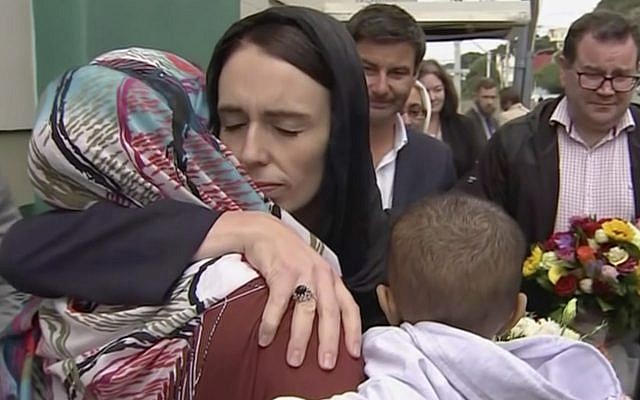
AP_19076275452111-640x400
In this image made from video, New Zealand’s Prime Minister Jacinda Ardern, center, hugs and consoles a woman as she visited Kilbirnie Mosque to lay flowers among tributes to Christchurch attack victims, in Wellington, March 17, 2019. (TVNZ via AP) https://www.timesofisrael.com/new-zealand-pm-comforts-mourning-muslim-community-after-deadly-mosque-shooting/


2019-02-16

The Truth About Islam and Democracy

Creative Commons License
This work is licensed under a Creative Commons Attribution 4.0 International License.

by Neil Godfrey

We’ve posted about Islam, democracy and the different meanings of sharia law before. See, for example,

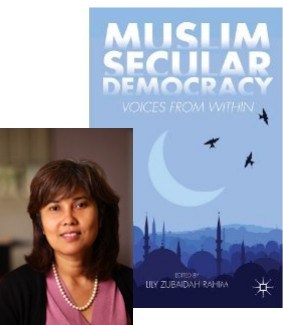
  • three posts posts based on Muslim Secular Democracy: Voices from Within by Associate Professor Lily Zubaidah Rahim;untitled 2 e13679703383922 150x150
  • quite a few posts citing John Esposito but one especially focused on the meaning of sharia based on Who Speaks of Islam? What a Billion Muslims Really Think by John Esposito and Dalia Mogahed. whospeaks e1475463920102 150x150
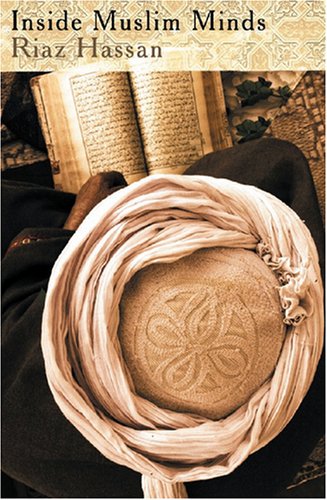
  • and glimpses of conflicts within Islamic societies as large scale movements push back against some of the worst conservatism according to Riaz Hasssan in Inside Muslim Mindsinsidemuslimminds 150x150
anwar dalia 300x210
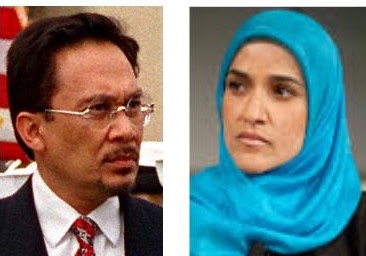
Anwar Ibrahim ; Dalia Mogahed

Here are interviews with two prominent Muslims, a liberal opposition leader in Malaysia, Anwar Ibrahim and then with Dalia Mogahed (co-author with Esposito). Take your pick between the podcast or transcript. (I read the transcript.)

The Intercept: Deconstructed (14th Feb 2019): THE TRUTH ABOUT ISLAM AND DEMOCRACY (WITH ANWAR IBRAHIM)

Some key points:

  • the anti-democratic states associated with Muslims are in the Arab world, the minority of Muslims. And it’s not hard to see why.
  • Sharia has a range of meanings and applications. It is among less well informed Westerners that it has a singular meaning. Any law that violates human rights is to be condemned. But we need first to know who and what, exactly, we are talking about in each situation.
  • Islam has bloody borders; a clash of civilizations. . . . both catch phrases are grounded in ignorance and selective amnesia.
  • Oh yeh — most Muslims love the fundamental principles of democracy. Most Muslims live in democracies and most of those who don’t live in a democracy want to live in a democracy.


2018-05-12

Ex-Muslims On Islam and Identity

Creative Commons License
This work is licensed under a Creative Commons Attribution 4.0 International License.

by Neil Godfrey

Ex-Muslims of North America: Normalizing Dissent

Islam & Identity

I found the speakers here worth listening to. The video runs for 1 hour 47 minutes but after the first 50 minutes it is question time.

Key points I took from the talks (not in video order — not even in a coherent order: just as jotted down at the time and/or recalled afterwards): Continue reading “Ex-Muslims On Islam and Identity”


2017-08-28

Another Muslim Voice to Listen To

Creative Commons License
This work is licensed under a Creative Commons Attribution 4.0 International License.

by Neil Godfrey

manea
Elham Manea — From her University of Zurich staff homepage.

I concluded a recent post with an acknowledgement of Maryam Namazie as a voice worth listening to in any discussion relating to Islamic and Islamist controversies today. Having just listened to an ABC’s Religion and Ethics Report interview, Muslim scholar says the burka isn’t Islamic, I have to add Elham Manea‘s name alongside Maryam’s.

The interview has been mutated as a “news story” by Siobhan Hegarty, Burkas are political symbols not Islamic ones, Muslim scholar says. You can listen to the full thirteen minute interview here here [link is to mp3]

Key points:

  • community and political speakers targeting violent Islamist movements in public debate miss the core problem; focus needs to be on the Islamist ideology that currently gets a free pass because it professes non-violence, yet it is in fact the extremist ideology that is spawning not only the terrorist violence but also an Islam that promotes segregation and a denial of full human rights.
  • If Islamophobes say all Muslims are essentially alike in a negative sense (potentially violent, in denial of fundamental human rights, etc), so a certain liberal defence of Muslims is just as “dehumanizing” by likewise viewing them as all alike in a “positive” sense, defending their head coverings, sharia institutions, etc.
  • the full burka (total covering, including veiled eyes) and even the “moderate” head covering hijab have become identified as “Islamic” since 1979 and the promotion of Wahhabism ultimately from Saudi Arabia’s petro-dollars.

(On the first point I have posted on Jason Burke’s detailed account of how that happened. I also appreciated Elham’s comment that the 1979 Iranian revolution saw a betrayal of the Iranian middle class and left-wing movement. How that sort of thing happens too often with revolutions!)

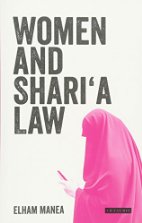
And I’ve just bought her new book, too, Women and Shari’a law: the impact of legal pluralism in the UK

maneabook

(Afterthought — I don’t really “know” that Elham is still a Muslim, but no doubt she has a Muslim background at least, and certainly addresses Muslims with understanding.)


2017-07-25

Oh Steven Pinker, please, you are better than this…..

Creative Commons License
This work is licensed under a Creative Commons Attribution 4.0 International License.

by Neil Godfrey

Steven, I really do love your books, at least I loved all of the ones I had read (Stuff of Thought; Language Instinct; Blank Slate; How the Mind Works) up to Better Angels — though I cannot deny you did give a slight warning of what was to come in Blank Slate, iirc. (Better Angels came across to me as one extended apology for neoliberalism.)

So what’s with these words that The Guardian has attributed to you”

Harvard professor and author Steven Pinker came out in support of Dawkins, writing to KPFA that their decision was “intolerant, ill-reasoned, and ignorant”.

“Dawkins is one of the great thinkers of the 20th and 21st century. He has criticised doctrines of Islam, together with doctrines of other religions, but criticism is not ‘abuse’,” said Pinker. “People may get offended and hurt by honest criticism, but that cannot possibly be a justification for censoring the critic, or KPFA would be shut down because of all the people it has hurt and offended over the decades.”

Yes, I can agree that Richard Dawkins is a great communicator of science. Whether he is a “great thinker” I do not know. Was “the selfish gene” his own discovery or was he communicating to a popular audience the way others in his field had come to understand a process of evolution?

But even if “Dawkins is one of the great thinkers of the 20th and 21st century” in the field of biological evolution, he is no better qualified to speak about Islam or any other religion than any other articulate “village atheist”. Dawkins is definitely not one of the great thinkers on Islam, not even Christianity.

I have no interest in covering some of the other indignant ravings about this event, least of all the incoherent ignorance spilt by Coyne et al, so will conclude with some links to views of those I consider among the more sane, though I am sure most of you already have your own lists:

Dawkins being “deplatformed” — Siggy:

There are many things I find objectionable about Dawkins, but I am personally able to separate that from his science writing, which seems fine.  So I don’t really agree with KPFA.

But geez, by turning this into a free speech issue, you’re making me take the opposite side!  

Organizations have the right to not invite Richard Dawkins — or me — to speak (PZ Myers)


2017-05-30

There is ALWAYS another interpretation: even of the Quran

Creative Commons License
This work is licensed under a Creative Commons Attribution 4.0 International License.

by Neil Godfrey

Thou shalt not kill. 

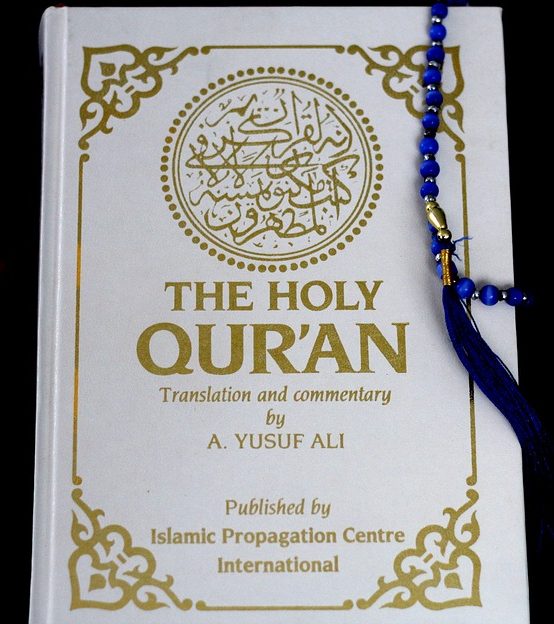
Holy Quran Ramadhan Religious Ramadan Pray 1409500 e1496130598141 266x300

Can’t argue with that, can we. It “speaks for itself”. No interpretation needed, right?

Except . . . .

People do indeed “interpret” the sixth commandment. They interpret it to mean that it does not forbid all killing, only the killing of persons; it does not apply to killing ants and flies. You can kill those. I think it is fair to guess that most believers in the Bible interpret the command to apply to killing that is not state-sanctioned. It is state-sanctioned, and therefore right, for soldiers to kill in war time. I imagine those who disagree with that interpretation and say it means we should not kill any other human under any circumstance are the minority. Pacifists, extremists. We might jail them in wartime or even shoot them.

Thou shalt not suffer a witch to live.

Again, very clear and unambiguous. There’s simply no way you can “interpret” your way out of the blunt meaning of that commandment. It means you have to kill anyone who identifies as a witch. Christians included it in their Bible so why don’t they obey that command? Paul wrote that witchcraft ranks alongside idolatry which also requires the death penalty. So why don’t Christians put witches on death row along with murderers?

Somehow most Christians do find a way to interpret that command, not to change its meaning, but to relegate it to a status that is not relevant to them today.

When the LORD your God brings you into the land which you are entering to take possession of it, and clears away many nations before you . . . and when the LORD your God gives them over to you, and you defeat them; then you must utterly destroy them . . . and show no mercy to them. . . . And you shall destroy all the peoples that the LORD your God will give over to you, your eye shall not pity them. . . .

God commanded the native inhabitants of Canaan should all be killed, too. A few extremist Jews do still believe in that command and when opportunities permit carry it out. You can’t fault them for their understanding of and obedience to the Bible. But no-one except the extremists themselves would suggest that they speak for “true Judaism” today.

No doubt most adherents of the Jewish religion acknowledge the terror in that command, but at the same time the plain evidence before our eyes tells us that most of them do not interpret that command in a way that obligates them to kill all Palestinian Arabs today. A few do boast that they believe in keeping both the spirit and letter of that command and they do kill Palestinian Arabs when opportunities permit. But they are the newsworthy exception. We do not judge the entire religion of Judaism according to those few Israeli terrorists.

But what is the “correct interpretation”?

Continue reading “There is ALWAYS another interpretation: even of the Quran”


2017-05-26

Quran, Bible — both are powerless without interpretation

Creative Commons License
This work is licensed under a Creative Commons Attribution 4.0 International License.

by Neil Godfrey

Scott Atran wrote the following four years ago in response to Sam Harris’s insistence that Islam per se, the Quran in particular, were to blame for terrorist violence. I think such views expressed by Harris are seriously misinformed and potentially harmful.

Context-free declarations about whether Islam, or any religion, is inherently compatible or incompatible with extreme political violence – or Democracy or any other contemporary political doctrine for that matter — is senseless. People make religious belief – whether Islam, Christianity, Judaism, Buddhism, and so forth – compatible with violence or non-violence according to how they interpret their religious beliefs.

And how people interpret religious injunctions (e.g., the Ten Commandments), as well as transcendental aspects of political ideologies, almost invariably changes over time.

For example, on the eve of the Second World War, political and Church leaders in Fascist Italy and Spain claimed that Catholicism and Democracy were inherently incompatible, and many Calvinist and Lutheran Protestants believed that God blessed the authoritarian regime. As Martin Luther proclaimed, “if the Emperor calls me, God calls me” – a sentiment that Luther, like many early Christians, believed was sanctified by Jesus’s injunction to “Render to Caesar the things that are Caesar’s, and to God the things that are God’s.” Nevertheless, the principles of modern liberal democracy first took root and grew to full strength in The European Christian and Colonial heartland. As Benjamin Franklin expressed it in his proposal for the motto of the new American Republic: “Rebellion against Tyranny is Obedience to God.”

Or, as the Coordinating Council of Yemeni Revolution for Change put it, an Islam of “basic human rights, equality, justice, freedom of speech, freedom of demonstration, and freedom of dreams!” (National Yemen, “The Facts As They Are,” Youth Revolutionary Council Addresses International Community, April 25, 2011).

That there is a cruel and repugnantly violent contemporary current in Islam, there is no doubt. Factions of the Christian identity movement, the Tamil Tiger interpretation of Hinduism as necessitating suicide attacks against Buddhist enemies*, Imperial Japan’s interpretation of Zen Buddhism as a call to a war of extermination against the Chinese, all have produced cruel and barbarous behavior that has adversely affected millions of people.

(Bolded emphasis is mine)

* Since 2013 we have seen the rise of murderous violence by Hindus and  Buddhists against Muslims in India and Myanmar/Burma.


2017-03-27

Muslim Profiling and Immigration

Creative Commons License
This work is licensed under a Creative Commons Attribution 4.0 International License.

by Neil Godfrey

I like Maryam Namazie. I like her work. I like her ideas. I used to like George Galloway, especially for his blunt testimony to US senators ignorantly accusing him profiting from Iraqi oil sales, but in recent years he has alienated me with his support for Islamist ideology. He seems to side with political Islamist regimes and political movements because they are anti-imperialist or anti-American. That strikes me as comparable to supporting Hitler because of his declaration of war on the United States.

Fuck2 630x446 1 630x340 300x162

Just to be clear: Islamism is not Islam. I have spoken above of Islamist ideology which is a political ideology that denies the legitimacy of Western democracy and Enlightenment values. I consider Islamism as much a threat as politically active Christian fundamentalists and White Supremacist groups. Islamists have dangerous political ideas that need to be combatted as much as any other fundamentalist or extremist Western religious or political ideology. Most Islamists are no more violent than are most people who oppose abortion. Only a minority of pro-lifers blow up abortion clinics and similarly only a minority of Islamists support terrorism.

Most Muslims who are fleeing war-torn regions and oppressive Muslim regimes are fleeing the horrors perpetrated by Islamist ideology. Maryam Namazie — back to her — speaks of what she sees as a “tsunami of atheism” washing through Muslim regions today. I have heard elsewhere that atheism is on the rise in those places. Maryam Namazie herself was taken by her parents from Iran when they could see oppressive Islamists taking over the revolution against the brutal shah in 1979.

Last night I read the transcript of a Skype discussion between Sam Harris and Maryam Namazie and it helped clarify some issues for me. The following is taken from the ideas Maryam expressed there.

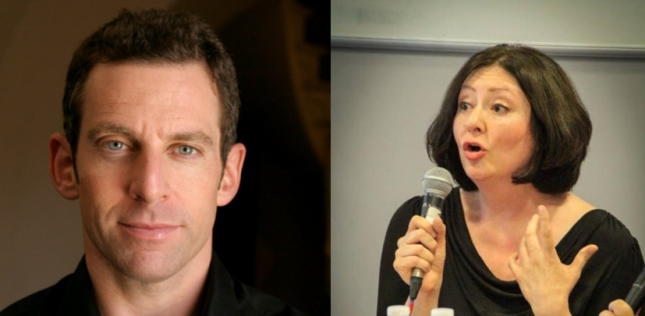
harris namazie 300x147

So what’s wrong with profiling Muslims? Everything. Most Muslims are Muslims for no reason other than that they were born to Muslim parents. That’s the only reason. Many persons in those countries may in fact be privately atheist or agnostic but by law they are officially identified as Muslims on identity cards or passports. Look at photographs of ordinary shoppers and students in Iran or Afghanistan thirty years ago and you will swear you are looking at modern Western cities. All of that freedom and secularism has been lost in Muslim regions because of the historically recent rise of Islamist regimes. That’s a horrific story that can be told another day.

Profiling people because of their Muslim religion is misguided and dangerous. It is misguided because it ignores individuals and sees only collective identities. It brands people as potentially dangerous on the basis of their being born to Muslim parents and ignores the reality of why individuals are fleeing those countries and what many of them unable to flee are suffering there.

It is dangerous (this is my addition) because it helps alienate collectives of people and makes their assimilation into Western society more difficult than it need be. Alienated groups are vulnerable to anti-social behaviour, crime, terrorism.

What is wrong with special provisions to put a halt to Muslim immigration? Don’t we need to protect our Western culture from being swamped by benighted aliens? Continue reading “Muslim Profiling and Immigration”


2017-02-28

Wahhabism: The Ideology of Hate

Creative Commons License
This work is licensed under a Creative Commons Attribution 4.0 International License.

by Neil Godfrey

Ruba Ali Al-Hassani
Ruba Ali Al-Hassani

An eloquent piece by Ruba Ali Al-Hassani published last year in The Huffington Post: Wahhabism: The Ideology of Hate. Ruba uses the myth of Islamic foundations (Muhammad did this and said that, etc) to justify some of her points on a “theological” basis, but that’s okay. I don’t mind too much people using myths for positive reasons. Anyway, a few excerpts. . . .

Wahhabism is an immense threat to any chance of peace in the Muslim and non-Muslim world. It is an ideology that openly advocates for violence against minorities and any majority-member Sunni who opposes it. It is an ideology that arose with violence since day one. It is an ideology that is misogynistic, sectarian, takfiri, and violent.

Wahhabism is an ideology that tells women they’re intellectually challenged and morons. . . . 

It is worth noting that Wahhabism not only tells women that they are sub-human, but that non-Arabs are especially sub-human. Wahhabism prevents Arab women from mingling with Arab men lest they “fall in sin”, yet they can be left alone with their male South-Asian drivers. This double standard is based on a racist idea that South-Asian men are not “men” & no Arab woman would be attracted to them and fall in sin. Continue reading “Wahhabism: The Ideology of Hate”


2016-10-07

Something Rotten in the Lands of Islam

Creative Commons License
This work is licensed under a Creative Commons Attribution 4.0 International License.

by Neil Godfrey

The survey of Muslim religiosity was carried out in

  • Indonesia,
  • Pakistan,
  • Malaysia,
  • Iran,
  • Kazakhstan,
  • Egypt
  • and Turkey.

It included statements on the respondents’ image of Islam. The survey listed forty-four items that examined religious beliefs, ideas and convic­tions. These statements were generated by consulting some key sociological texts on Muslim societies by authors such as Fazlur Rahman, Ernest Gellner, William Montgomery Watt, Mohammad Arkoun and Fatima Mernissi. Respondents were asked to give one of the following six responses to each of the statements presented: strongly agree, agree, not sure, disagree, strongly disagree, or no answer. More than 6300 respondents were interviewed. (Hassan, Inside Muslim Minds, p. 48)

This is post #5 on Inside Muslim Minds by Riaz Hassan. We are seeking an understanding of the world. If you have nothing to learn about the Islamic world please don’t bother reading these posts since they will likely stir your hostility and tempt you into making unproductive comments.

We have looked at a historical interpretation of how much of the Muslim world became desensitized to cruel punishments and oppression of women and others. But what does the empirical evidence tell us? Here Hassan turns to a study explained in the side-box. Each question was subject to a score between 1 and 5, with “very strong” being indicated by 1 or 2.

Following are the 20 questions (out of a total of 44) that generated the highest mean scores.

Overall the results tell us that Muslims feel strongly about “the sanctity and inviolability” of their sacred texts. There is a strong belief overall that all that is required for a utopian society is a more sincere commitment to truths in those texts.

In other words, there is a large-scale rejection of modern understandings of the genetic and environmental influences upon human nature.

The evidence indicates very strong support for implementing ‘Islamic law’ in Muslim countries. (On “Islamic Law” see Most Muslims Support Sharia: Should We Panic?) Respondents strongly support strict enforcement of Islamic hudood laws pertaining to apostasy, theft and usury. The purpose of human freedom is seen not as a means of personal fulfilment and growth, but as a way of meeting obligations and duties laid down in the sacred texts. This makes such modern developments as democracy and personal liberty contrary to Islamic teachings. The strong support for strict enforcement of apos­tasy laws makes any rational and critical appraisals of Islamic texts and traditions unacceptable and subject to the hudd punishment of death. The strength of these attitudes could explain why hudood and blasphemy laws are supported, or at least tolerated, by a significant majority of Muslims. Strong support for modelling an ideal Muslim society along the lines of the society founded by the Prophet Muhammad and the first four Caliphs is consistent with the salafi views and teachings discussed earlier. (p. 54)

But notice: Continue reading “Something Rotten in the Lands of Islam”


The Poisonous Cocktail of Salafism and Wahhabism

Creative Commons License
This work is licensed under a Creative Commons Attribution 4.0 International License.

by Neil Godfrey

insidemuslimmindsContinuing from Muslim Nations and the Rise of Modern Barbarism . . . .

According to Abou El Fadl, characteristic features of salafabism (combination of salafism and wahhabism) include the following:

  • a profound alienation from institutions of power in the modern world and from Islamic heritage and tradition
  • a supremacist puritanism that compensates for feelings of defeat­ism, disempowerment and alienation
  • a belief in the self-sufficiency of Islamic doctrines and a sense of self-righteous arrogance vis-a-vis the ‘other’
  • the prevalence of patriarchal, misogynist and exclusionary orien­tations, and an abnormal obsession with the seductive power of women
  • the rejection of critical appraisals of Islamic traditions and Muslim discourses
  • the denial of universal moral values and rejection of the indeter­minacy of the modern world
  • use of Islamic texts as the supreme regulator of social life and society
  • literalist, anti-rational and anti-interpretive approaches to reli­gious texts.

(Hassan, Inside Muslim Minds, p. 46, my own formatting and bolding in all quotations)

There is little room for me to go beyond Hassan’s own outline of El Fadl’s account:

Salafabism has anchored itself in the security of Islamic texts. These texts are also exploited by a select class of readers to affirm their reactionary power. Unlike apologists who sought to prove Islam’s compatibility with Western institutions, salafabists define Islam as the antithesis of the West. They argue that colonialism ingrained in Muslims a lack of self-pride and feelings of inferiority.

For salafabists, there are only two paths in life: the path of God (the straight path) and the path of Satan (the crooked path): The straight path is anchored in divine law, which is to be obeyed and which is never to be argued with, diluted or denied through the application of humanistic or philosophical discourses. Salafabists argue that, by attempting to integrate and co-opt Western ideas such as feminism, democracy or human rights, Muslims have deviated from the straight to the crooked path. (pp. 46-47)

And it gets worse . . . . Continue reading “The Poisonous Cocktail of Salafism and Wahhabism”


Muslim Nations and the Rise of Modern Barbarism

Creative Commons License
This work is licensed under a Creative Commons Attribution 4.0 International License.

by Neil Godfrey

This post is the third in my notes from Inside Muslim Minds by Riaz Hassan.

The second response among Muslims to their experience of colonialism and its aftermath is salafism.

Response 2: Salafism

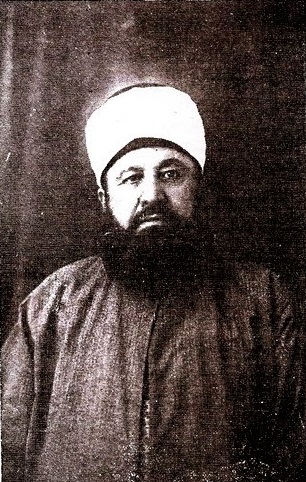
muhammad_abduh
Abduh

Whereas apologetics was a direct response to colonial rule, salafism emerged out of apologetics but in the post-colonial era. When independent nations experienced the failure of their ruling elites to bring about the reforms and better life — “jobs, economic development, welfare for citizens and equality of citizenship” — that they had promised.

Building on apologetic thought the salafists concluded that this failure was the consequence of using secular laws instead of the laws of God.

sayyid_dschamal_ad-din_al-afghani
Al Afghani

Some of the founding ideologues of the salafist movement were Mohammad Abduh, al-Afghani, Muhammad Rashid Rida and (one that we have discussed on Vridar before) Sayyid Abul A’la Maududi.

rashid_rida_1
Rida

Like the apologists these early salafists believed that the Islamic religion was entirely compatible with modernism. Recall that the apologists argued that modern western ideals like democracy, constitutional governments, socialism etc were all to be found in early Islam. What was required of modern Muslims was to interpret their sacred texts in the context and according to the needs of adapting to the modern world. Moreover, there was no single interpretation that could demand a monopoly on “the correct interpretation”.

Salafism as it originally developed maintained that, on all issues, Muslims ought to return to the original textual sources of the Qur’an and the Sunnah of the Prophet and interpret them in the light of modern needs and demands without being slavishly bound by the interpretive precedents of earlier Muslim generations. In this respect, it was a distinctive intellectual project. Salafism advocated a kind of interpretive community in which anyone was qualified to return to the divine texts and interpret their messages. . . . [I]t was not hostile to competing Islamic juristic traditions, Sufism or mysticism. (p. 43)

Further, Continue reading “Muslim Nations and the Rise of Modern Barbarism”


2016-10-06

Islam and the Rise of Barbarism

Creative Commons License
This work is licensed under a Creative Commons Attribution 4.0 International License.

by Neil Godfrey

insidemuslimmindsSuch violent, repulsive and publicly visible acts could be interpreted as  the by-product of social malignancies that have festered for a long time. Dr Khaled Abou El Fadl—an eminent Islamic jurist . . . . —provides a succinct description of how historical and social conditions interact to form a particular mentality . . . .

[W]hen we speak about the meaning of Islam today, we are really talking about the product of cumulative enterprises that have generated communities of interpreta­tion through a long span of history. (p. 37)

The shocking injustices and brutality in the Muslim world that we hear about far too often are not isolated acts of a few troubled psychopaths. They are systemic and carried out with considerable (though fortunately not always unanimous) popular support.

Such acts take place because of social dynamics that have desensitized and decon­structed a society’s sense of moral virtue and ethics. Theological constructs and social responses that tolerate the commission of acts of cruelty are the product of a long process of indoctrination and acculturation. Indoctrination facilitates their com­mission; acculturation mutes or mitigates the sense of outrage over the offensive behaviour. (p. 37)

Boiling the frog

Each act of barbarism becomes a historical precedent for further similar acts and for increasingly easier public acceptance. (As for indoctrination, we are also looking at how that works first hand.) Each act becomes another topic of community discussion; explanations and interpretations that emerge become part of the social group’s identity and moral foundations. Theological perspectives of these same events are meanwhile being transmitted through generations of families, communities and institutions. The point is that community interpretations and practices adapt, evolve, change emphases and focus over time and that’s true of most societies throughout history. So the question that arises is, What historical changes have been emerging in “recent” history in the Muslim world? And when we say “recent” we are reaching back to the eighteenth century when European powers made their first takeovers of large numbers of Muslim populations (e.g. India, Egypt).

Three responses to Western colonialism

To make sense of the incidents described, we need first to analyze three streams of Islamic consciousness that developed under the historical conditions faced by Muslim societies over the previous few centuries. Under the conditions of economic underdevelopment, technological backwardness and powerlessness prevailing today in the Muslim world, elements of these three streams have somehow fused to give rise to a new hybrid Islamic consciousness: salafabism . . . . (p. 38, my formatting and highlighting in all quotations)

As we saw in Jason Burke’s historical narrative Saudi Arabia used its windfall from rising oil prices in the 1970s to propagate its vicious brand of wahhabist Islam. In addition to wahhibism Fadl points his finger at two other strands of Islamic thought, the first being apologetics. Let’s take them in order.

Response 1: Apologetics

A common feature of most Muslim societies is a shared history of colonialism under European dominance. This sociopolitical experi­ence was accompanied by a culture of orientalism: an assumption of Western superiority combined with a condescending trivialization of Islamic cultural achievements. The onslaught of these processes led not only to loss of power by political and religious elites in the lands of Islam, but also to the devaluation and deprecation of Islamic beliefs and institutions. The dominant intellectual response of Muslims to this challenge from around the mid-eighteenth century came from the apologetics. (p. 39)

Conquered peoples typically find ways to resist their conquerors even if only by symbolic means. Recall the way some Jewish leaders responded to the conquest of Judea by the Greco-Romans who justifiably took great pride in their cultural achievements. “Plato is so wonderful?” some Jews (and subsequently some Christians) challenged. “Ha! Plato filched all of his ideas from Moses!”

Among the conquered and humiliated Muslims were those who responded in a similar way to their Western overlords. Anything of value that the Europeans had produced was thought by Muslim apologists to have owed its origins to Islamic science or philosophy or political ideas.

According to apologists, Islam

  • liberated women,
  • created democracy,
  • endorsed pluralism,
  • protected human rights
  • and introduced social welfare

long before these institutions ever existed in the West. One implication of this orientation was that, since Islam had invented most modern institutions, there was no incentive to engage in any further thinking or analysis, except on very marginal issues. (p. 40)

So it was that Western orientalists (those who looked down upon oriental culture, ways and beliefs with a certain contempt) found themselves mirrored by Muslim apologists who in turn looked down upon Westerners with the same disdain. That’s one time-honoured way of a defeated people holding on to their self-worth and dignity.

But that kind of response has a serious down-side: it ossifies one’s religion.

Religion is no longer an evolving and adapting system that is constantly being critically studied and subject to adaptation in the face of new circumstances. An idealized construct is created, and this is sanctified and set in stone as a foundational golden age. Anything that falls short of that ideal is the fault of the enemy. Trying to cope with the humiliation that came with European conquest and hegemony some Muslims found refuge in a conviction that their ancient texts, ways, beliefs had from the beginning of time been superior and well in advance of anything associated with their new rulers.

So for Muslim apologists the superiority of Islam became a mirror reaction to their European masters’ presumptions of superiority. As cultural arrogance made it impossible for Europeans to bend and adapt so the same arrogance of apologists made it impossible for them to analyse and adapt their own traditions and belief systems.

Apologists treated the Islamic tradition as if it had fossilized at the time of the Prophet and the Rightly Guided Companions (the four Caliphs who succeeded Muhammad).

And if there is nothing to reflect upon except to bask in the superiority of one’s beliefs then anyone can become an authority. The true Muslim intellectuals are marginalized into irrelevancy. The door is open to anyone becoming “the voice” of “truth”. The solutions become easy. If the Muslim peoples are under the boot of the aliens, unable to match the Westerners in political and military might and so liberate themselves, it is because Muslims are not faithful and devout enough.

The way to liberation and self-respect, apologists believed, was to become more fervently dedicated to the myth of the old ways. And those old ways proved to have even preceded the best the West had to offer such as democracies and human rights.

Islamic apologists were ultimately motivated by nationalistic aspirations for political, social and cultural independence from the West.

Islam thus came to be seen as a kind of anti-colonialist resistance ideology capable of restoring Muslim pride and political power. Political liberation anchored itself in a religious orientation that was puritanical, supremacist and opportunistic. (p. 41)

That was one response. The other two I’ll cover in another post. We also need to examine the empirical evidence of how these different types of responses took hold in varying degrees in different regions of Muslim peoples and fused into an ugly ideology. We will see that those differences can be correlated with respective historical experiences with the West.


2016-10-05

Understanding Muslims and Barbarism

Creative Commons License
This work is licensed under a Creative Commons Attribution 4.0 International License.

by Neil Godfrey

insidemuslimminds My first post covering a little of what I learned about the Muslim religion (Sharia) and its global applications did not get off to a good start. I have already posted three times on Rahim’s Muslim Secular Democracy: Voices from Within so this post is based on a key theme in the third of the works I found most useful in my attempt to understand the Muslim world, Riaz Hassan’s Inside Muslim Minds.

I won’t repeat the horrific news we have all heard about beheadings, stonings, amputations, honour killings though Hassan describes in some detail several of the more shocking cases of these in the pre-ISIS era, especially from Pakistan and Saudi Arabia. Worse, since the introduction of these laws that were supposedly intended to

protect honour, life and the fundamental rights of a citizen, as guaranteed under the constitution and to ensure peace and provide speedy justice through an independent non-discriminatory Islamic system of justice (p. 23)

the long term consequences have been the reverse. Instead of fewer accusations against blasphemy and sexual offences the numbers of incidents of these brought before the courts has only been avalanching:

In such a society as Pakistan, with its deeply embedded patriarchal beliefs and attitudes, the hudood laws in general and the law pertain­ing to zina (fornication and adultery) in particular have been widely and recklessly abused. In particular, they have become an instrument of oppression against women. . . .

The hudood laws and their successors have severely eroded and undermined the constitutional guarantees of life and liberty for all citi­zens. Instead of protecting ‘honour, life and the fundamental rights of a citizen’, these laws have become instruments of oppression.

The hudood laws, far from creating a just and equal society, have succeeded only in imprisoning half of the country’s population ‘in a web of barbaric laws and customs’.  (pp, 23, 27, 28)

Developments like these do disturb more enlightened Islamic scholars:

According to some Islamic scholars, the introduction of these laws represents an ugly blot on the divine purity of Islamic doctrine. In a carefully researched book, Dr Mohammad Tufail Hashmi, a well-known Pakistani Islamic scholar, argues that, in conferring supposed ‘divine’ status on the Islamic hudd laws as well as on sup­porting laws laid out in the Pakistan Penal Code, the hudood ordi­nances violate the sanctity of the divinely ordained laws of Islam. They also convey a flawed and unworthy image of Islam to the world. In Islamic juristic tradition, punishing an innocent is a greater and more serious sin than acquitting a guilty person. According to Hashmi, the enforcement of hudood laws in Pakistan is a perversion of Islamic law and is perpetuating a warped image of Islam. (p. 28)

And the Pakistan slide into this kind of barbarism is symptomatic of what has been happening in other Muslim countries, too. Pakistan is not alone.

Of course not all Muslims approve of these sorts of laws. But as Hassan points out,

the fact that a significant proportion of Muslims at least tolerates them indicates a troubling level of moral lethargy in the col­lective life of contemporary Islam. (p. 35)

But let’s be fair to Mr Hyde and not overlook the undoubted humanity of his other Dr Jekyll nature:

It is also important to emphasize that the examples described above coexist with a pervasive sense of common humanity, kindness and genuine concern for the well-being of others and the under­ privileged in Muslim societies. (p. 35)

Having spent some time getting to know a few Muslim countries (Indonesia, Malaysia, Turkey) I can certainly vouch for that side of the Muslims. Natural disasters, refugees, orphans, the poor — generosity among the ordinary Muslims wanting to alleviate suffering of those affected is often truly inspiring. Muslims I have known in Indonesia, even around the region of Solo that was until recently infamous as a hideout region for Islamic terrorists, really do have human souls, too.

Before beginning to analyze historically and empirically what accounts for the ugly side of so many Muslim countries Riaz Hassan raises the following question:

Do the laws and practices described at the beginning of this chap­ter negate not only the humanitarian traditions of Islam but also the essential message of the Qur’an, which enjoins believers to establish a viable social order on earth that will be just and ethically based? Only the most deluded or self-absorbed Muslims could remain unconcerned by the sheer quantity and ugliness of the incidents described earlier. The hudood and blasphemy laws of Pakistan, the seriously flawed judicial systems and the rampant oppression of women and the poor (who are the main victims of the hudood ordi­nances and other similar laws) cannot be attributed to an aberra­tional fanaticism considered marginal and unrepresentative. The evidence suggests instead a pattern of abusive practice. The Qur’an is full of warnings to Muslims that if they fail to establish justice and bear witness to truth, God owes them nothing and will replace them with other people who are more capable of honouring God by estab­lishing justice and human equality on earth. (p. 36, my own bolding)

What has led to this state of affairs?

People do not just wake up one day and decide to commit acts of terrorism, kill in the name of ‘honour’, or behead someone for possessing an amulet—in the name of Islam. They are not naturally inclined to sanction acts by religious establishments of the state that prevent young female students from escaping a school fire, or humiliate vic­tims of rape and injustice—in the name of Islam. Such acts take place because of social dynamics that have desensitized and deconstructed a society’s sense of moral virtue and ethics. (p. 37)

Hassan’s explanation draws most heavily upon the writings of Dr Khaled Abou El Fadl. I’ll try to do the account of Fadl and Hassan justice in the next post.

khaled_abou_el_fadl_professional_headshot
Khaled Abou El Fadl